We are most appreciative when individuals choose to make contributions to mark a rite of passage, an important date or a life well lived. The RFC welcomes inquiries from individuals interested in creating similar tributes to those described here (please send inquiries to jenn@rfc.org or call us at 413-529-0063). The RFC is honored to be the recipient of such an out-poring of generosity and pleased that this support will benefit future generations of the progressive community.
The Clinton and Muriel Jencks Memorial Fund
In March 2008, Muriel Sobelman-Jencks established an annual grant of $1000 in memory of her husband, Clinton E. Jencks (1918-2005), “El Palomino,” organizer for United Mine, Mill and Smelter Workers, Local 890. Clinton played himself in “Salt of the Earth,” the only American film to be blacklisted. The movie depicted the McCarthy era strike by New Mexico zinc miners and the struggle of women to achieve equality, and became one of 400 motion pictures selected by the Library of Congress for the National Film Registry. This annual grant is designated to assist children of workers who have been penalized, injured, fired, jailed or have died for their organizing efforts to build unions, improve working conditions and elevate living standards for all in the work force. The Fund was renamed the Clinton and Muriel Jencks Fund after Muriel's passing in 2017 to honor her life along with Clinton's. Anyone who wishes to donate to the Jencks Memorial Fund should indicate that designation when making a contribution to the RFC.
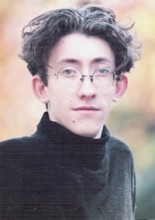
The Ozzy Klate Memorial Fund
In the fall of 2007, the RFC announced a named fund established by a most generous couple as a tribute to their son. The Ozzy Klate Memorial Fund (OKMF) of the Community Foundation of Western Massachusetts, will provide a minimum of $1500 annually to support one or more of the RFC's spring grants. The OKMF founders have established the following criteria: The awards will provide for one or more teenagers who have demonstrated motivation, dedication, inspiration and productivity in the creative arts and progressive social thought, action and spiritual liberation. Whenever possible the fund will benefit teenagers or programs in Western Massachusetts. Anyone who wishes to donate to the OKMF should make a check payable to the Community Foundation of Western Massachusetts, 1500 Main Street, Suite 1800, Springfield, MA 01115 and write "Ozzy Klate Memorial Fund" in the memo line on the bottom left-hand corner of the check.
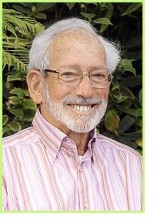
The Herman Warsh Fund
The Herman Warsh Memorial Fund was announced in the spring of 2006. Herman was one of Robert Meeropol's initial supporters when Robert was launching the RFC. Herman and his wife, Maryanne Mott, generously helped the RFC in its infancy and remained steadfast supporters. Following Herman's death, Maryanne established this award in his memory. Each fall, one RFC grant will receive support from the Herman Warsh Fund. Anyone who wishes to donate to the Herman Warsh Fund should indicate that designation when making a contribution to the RFC.
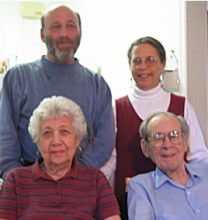
The Edith and George Ziefert Fund
In December 2005, Edith Ziefert, the widow of George Ziefert, established the first endowed memorial fund in the RFC's history. This fledgling endowment has been buoyed by two substantial contributions from the Ziefert family and has been supplemented by numerous other donations from family friends. Following Edith's passing in November 2010, her name was added to the Fund as well. The Edith and George Ziefert fund is one family's way of honoring their relatives by continuing their legacy of support for progressive ideals. We are deeply grateful for this generosity. Anyone who wishes to donate to the Edith and George Ziefert Fund should indicate that designation when making a contribution to the RFC.
The Moish and Lillian Antopol Memorial Fund
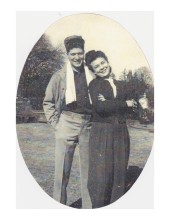
“Our parents, Moish and Lillian Antopol, were hounded by the FBI for labor organizing and Communist Party activities promoting human brotherhood, justice and world peace. All of that was considered subversive during our childhood years from the 1940s through the early 1960s. Our father’s imprisonment occurred before we were born (his cell-mate, also a labor organizer during the Depression, was our mother’s brother who arranged a blind date at a Communist Youth Organization rally). The memories of our childhood experiences enable us to empathize with the families helped by the RFC. We understand the pressures of living under government scrutiny and illegal surveillance. In our blue-collar family, the blacklist caused constant financial insecurity. Our parents did not intend for us to sense their defiance and fear, to feel isolated in our neighborhood, to get indigestion when FBI agents barged in at dinner times, to learn wariness or to shoulder the terrible burden of keeping dangerous secrets. With gratitude, we remember sharing ongoing support with our family’s brave and generous comrades and the freedom of being with their children. We cherish enduring images of our mother leading songs, our father leading discussions, and the fun we had at Party picnics. Our lives have honored our parents’ values. With this fund in our parents’ memory we carry forward our legacy to another generation of activists who continue the struggle for freedom, justice and peace.” - the Antopol family
Anyone who wishes to donate to the Moish and Lillian Antopol Memorial Fund should indicate that designation when making a contribution to the RFC.
The Harry Flemming Fund
In late 2019, Harry Flemming’s daughter and son-in-law established this fund in his memory to make it possible for children and grandchildren of prisoners to visit their incarcerated loved ones. As they explain, “Dad was a high school student in 1927 when he was sentenced to thirty years in prison for defending himself and his friends from an armed attack. After serving twelve years he was pardoned by the governor. During his years in prison he saw his family very infrequently because it was so expensive and so far away to visit.
After release, Dad became a union organizer and a lifelong, outspoken social activist in California. He was a devoted father and friend. He loved to read the newspaper, speak Spanish and play the banjo. Although he had scars from the trauma of his years in prison, he told us that he had a happy and satisfied life. We’re so grateful our father survived and thrived despite his unjust incarceration and resulting isolation. We hope grants from the Flemming Fund will allow other children to remain connected to their loved ones in prison and help their parents/grandparents live similarly full and satisfying lives.” Anyone who wishes to donate to the Flemming Fund should indicate that designation when making a contribution to the RFC.

The Bruce Miller Legacy Fund
In the summer of 2024 the RFC lost a founding member of the Board and a dear friend when Bruce Miller died after a battle with cancer. Bruce served on the Board for more than 30 years, from 1990 until his death. Bruce cared deeply about the families we worked with and, along with his wife Jane, who served as the RFC’s bookkeeper for our first 20-plus years, was always ready to do what was needed to help out.
Bruce worked as a staff attorney for the National Senior Citizens Law Center (NSCLC) before moving to the east coast in 1980 to join the faculty at Western New England University School of Law in Springfield, Mass. In his 40-plus year career at WNEU Bruce taught Constitutional Law, Federal Courts, Jurisprudence, and Civil Procedure while mentoring generations of students (including RFC Founder Robert Meeropol).
In recognition of Bruce’s deep commitment and importance to the RFC, and in collaboration with Bruce’s family, the RFC Board decided to create a new fund at the RFC: The Bruce Miller Legacy Fund. Each granting period, the Board will identify several grants to activist parents whose efforts are focused on issues, communities or priorities that were especially meaningful to Bruce. The family will select one of these grants, which will be designated as the Bruce Miller Legacy Fund grant.

The Richard and Janet Metcalf Union Activist Fund
The Richard and Janet Metcalf Union Activist Fund was established in 2026 to assist children of workers who have been penalized, injured, fired, jailed or who have died for their efforts to organize or build unions, improve working conditions and elevate living standards for all in the workforce.
Richard and Janet are lifelong union members and activists who believe that strong, diverse, and socially active unions are a necessary building block for a democratic and progressive society.
Janet was the second woman to complete a union sponsored statewide apprentice program to become a journeyman machinist in the state of Minnesota and an active member of the Machinists Union. Richard organized the shop he came out of and was an elected steward and union leader. He retired as the Director of Organizing and Corporate Affairs of the Laborers International Union of North American. He was arrested several times for his union activity. Anyone who wishes to donate to the Richard and Janet Metcalf Union Activist Fund should indicate that designation when making a contribution to the RFC.

The Barbara Cahn Memorial Fund
As a college student Barbara Cahn was a militant opponent of the war in Vietnam and spent time in the Cleveland jail for her participation in an anti-war demonstration. She was very active in her beloved LaGuardia Corner Gardens in New York City, and in the citywide community gardening movement, a movement constantly threatened by the forces of real estate development. And perhaps her background in the anti-war movement had some connection with her being the creator of what became a somewhat widespread slogan in the campaign in Greenwich Village against the massive NYU development campaign that threatened not only the garden but an entire neighborhood: “Flowers Not Towers!”
Barbara was also an extremely talented ceramicist, and was a working studio potter until her death. And for many years, Barbara was a contributing producer to an interview program on WNYC, public radio in New York City, where she and her colleagues received a Peabody Award for a segment she had developed.
The Barbara Cahn Memorial Fund, which will be launched in the fall of 2026 with generous support from Barbara’s husband Alan Ginsberg, will fund RFC grants for arts programs and gardening opportunities for the children of targeted activists and young people who face repression for their own organizing. Anyone who wishes to donate to the Fund should indicate that designation when making a contribution to the RFC.